What is CPQ? A plain definition for manufacturers
CPQ stands for Configure, Price, Quote. CPQ software is a quoting tool built for complex products: it guides configuration (options, compatibilities, technical constraints), computes the right price according to your commercial rules, and generates the offer: a technical quote, argued and ready to send.
You already use a CPQ without realising it: the car configurator. You cannot order an incompatible option; the price updates in real time; the order form comes out on its own. Large manufacturers have exactly the same mechanism for their machines and equipment, plus the sizing calculations specific to their trade.
Why neither your spreadsheet, your CRM nor your ERP is a quoting tool
In most industrial SMEs and mid-caps, quotes are built with tools diverted from their purpose:
- •The spreadsheet: flexible, but personal. Quoting rules live in one expert's Excel file: unshared, unverified, unmaintained.
- •The CRM: it manages the customer relationship and the pipeline, not technical reasoning. It knows where the quote stands, never how to produce it.
- •The ERP: it manages the downstream, meaning orders, production and invoicing. It steps in once the deal is won, not while it is being decided.
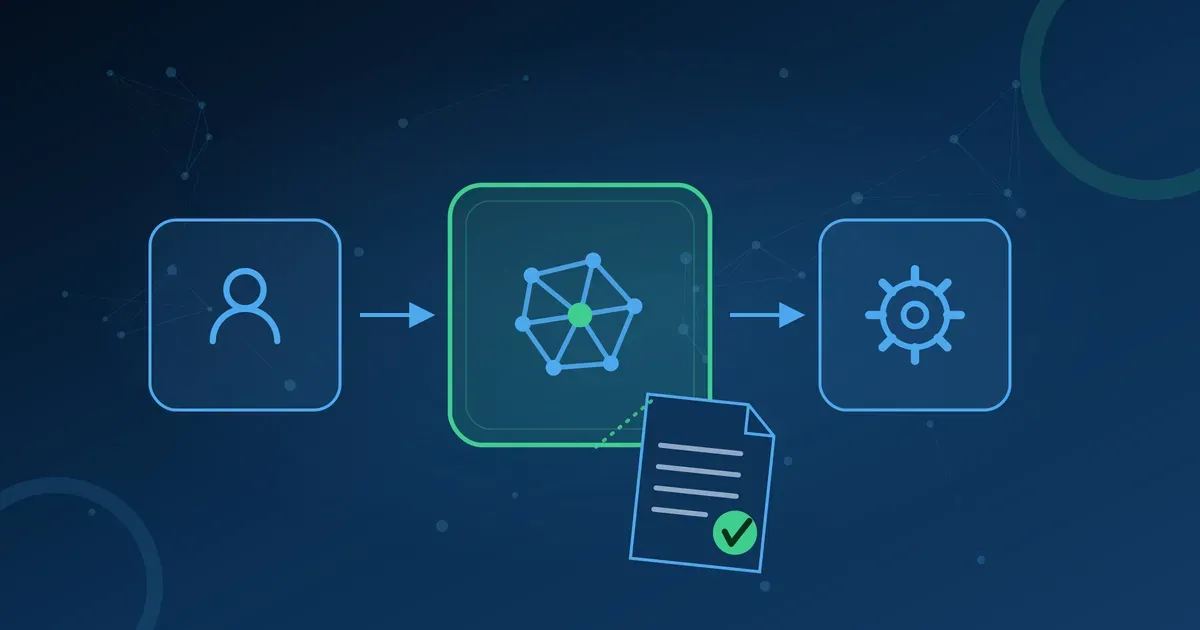
Between the CRM and the ERP, where the deal is actually decided (understanding the need, confronting it with your trade rules, deriving a configuration and a price), there is nothing. CPQ is that missing link: the only quoting tool designed for techno-commercial reasoning.
| Tool | What it manages | What it will not do |
|---|---|---|
| CRM | Customer relationship, pipeline | Produce a technical quote |
| Spreadsheet | Individual calculation | Share and secure the rules |
| ERP | Orders, production | Configure and price an offer |
| CPQ | Reasoning, from need to priced offer | Replace the other three |
What CPQ concretely changes: the numbers
Results published by equipped manufacturers speak for themselves. Husky, world leader in injection moulding equipment, cut the time spent on its tens of thousands of yearly quotes by 75%. Cleaver-Brooks, an industrial boiler manufacturer, went from a four-hour quoting time to fifteen minutes. Siemens Energy tamed a combinatorial space of one hundred and twenty variants on the air intake assembly of its turbines alone.
On the research side, the convergence is clear: according to Gartner (2025), quote automation reduces quote production time by about 35%; Nucleus Research measures a 56% efficiency gain in producing offers; and PWC associates CPQ adoption with a sales cycle shortened by 30 to 60%.
The underlying logic is simple: in a competitive industrial sale, the first reliable quote to arrive frames the consultation. CPQ turns quoting time, your main invisible handicap, into a commercial advantage.
Why industrial SMEs and mid-caps are not equipped (until now)
The cost of configuration
A traditional CPQ project is a six-figure project, with twelve to twenty-four months of implementation. What we observe on the market confirms a minimum entry ticket of around €45,000. The reason: every business rule must be programmed by consultants, then maintained at every catalogue evolution. Below a certain company size, the maths simply doesn't work.
Expert-only ergonomics
Legacy CPQs are operated through expert configuration interfaces: forms, option trees, rule catalogues. They cannot absorb a customer email written in everyday language. Between the real request and the tool, your sales rep remains the translator.
Agentic AI changes the game: the next-generation CPQ
This is precisely what a new generation of quoting tools changes, DARYL among them: an agentic CPQ, built on a business knowledge graph.
- •The tool learns your rules instead of having them programmed. The knowledge graph is built from your existing documents (catalogues, past offers, datasheets), then refined with your experts. When your catalogue evolves, the system learns the evolution.
- •The tool speaks your customers' language. The request comes in as is: email, PDF, drawing, photo. The assistant identifies what is missing, generates the right qualification questions, propagates technical constraints through the graph, and produces a priced offer in which every line is justified and traceable.
One point deserves emphasis: this approach is deterministic. Technical decisions (sizing, compatibilities, price) are derived from explicit rules through constraint propagation, never improvised by a statistical model. Natural language only operates at the edges: understanding the incoming request, drafting the outgoing offer. That is what makes the quote reliable, auditable and defensible six months or a year later.
From a ten-day quote to same-day pricing
The most visible result: the sales cycle is inverted. Instead of quoting after a complete technical study, that is, investing your most expensive expert days before knowing whether the deal is real, you send a reliable priced proposal very early. The customer validates the frame (budget, solution architecture), and the complete study only starts on a pre-validated deal.
For a sales team, the goal becomes simple to state and simple to measure: answer 100% of customer requests on time. The mechanical effect on the conversion rate is the equivalent of one additional salesperson, without recruiting.
FAQ: what manufacturers ask us about CPQ
Does a CPQ replace my CRM or my ERP?
No. CPQ fits between the two: the CRM manages the relationship, the ERP manages execution, the CPQ manages reasoning, from expressed need to priced offer. The three complement each other.
How long does it take to deploy a CPQ in an industrial SME?
A traditional CPQ: twelve to twenty-four months. An agentic CPQ that learns your rules from your existing documents: the first measurable results arrive in under three months, on a pilot product family.
Does CPQ work for make-to-order manufacturing?
Yes, and that is even where it pays off most. In make-to-order manufacturing, every quote is a small engineering project: pricing before the execution study turns sunk-cost work into sure-win work.
What's the difference between an agentic CPQ and a classic AI copilot?
A copilot based solely on a language model produces plausible text, including wrong references or wrong sizing, with no warning signal whatsoever. An agentic, deterministic CPQ derives every choice from explicit rules, and when a piece of data is missing, it asks the question instead of inventing it.
Move from reading to testing
The best way to judge a quoting tool is to confront it with your own customer requests. DARYL's Starter offer covers a standard product family, built from your existing documents, with first measurable results in under three months.